Chocolate: Food of the Gods
Just the word chocolate conjures a smile, but its power is so much greater than its delicious flavor. Chocolate has the potential to heal land, improve human health, and give Indigenous people the economic means to protect native forests. It has been revered by cultures throughout the Americas for over 6,000 years, served as currency among the Maya, and is used to smooth tensions between people. This project seeks to illuminate cacao’s gifts—not only as a flavor beloved around the world, but as a living bridge between land, culture, and wellbeing. The scientific name Theobroma cacao—literally, “food of the gods”—reflects both its divine status and its capacity to sustain life from soil to spirit.
My work explores the many ways cacao lives up to its name and serves as a metaphor for a path to global healing. As a photographer with degrees in Anthropology and Sustainable Communities, my focus on cacao is tied to people and land. It tells the story of cacao as a force for good—a plant whose restoration can heal degraded lands, empower Indigenous stewards, and remind us that diversity, in all its forms, is our greatest strength. From soil microbes to forest canopies to the people who savor its rich flavor, cacao models what it means to live in mutual flourishing.
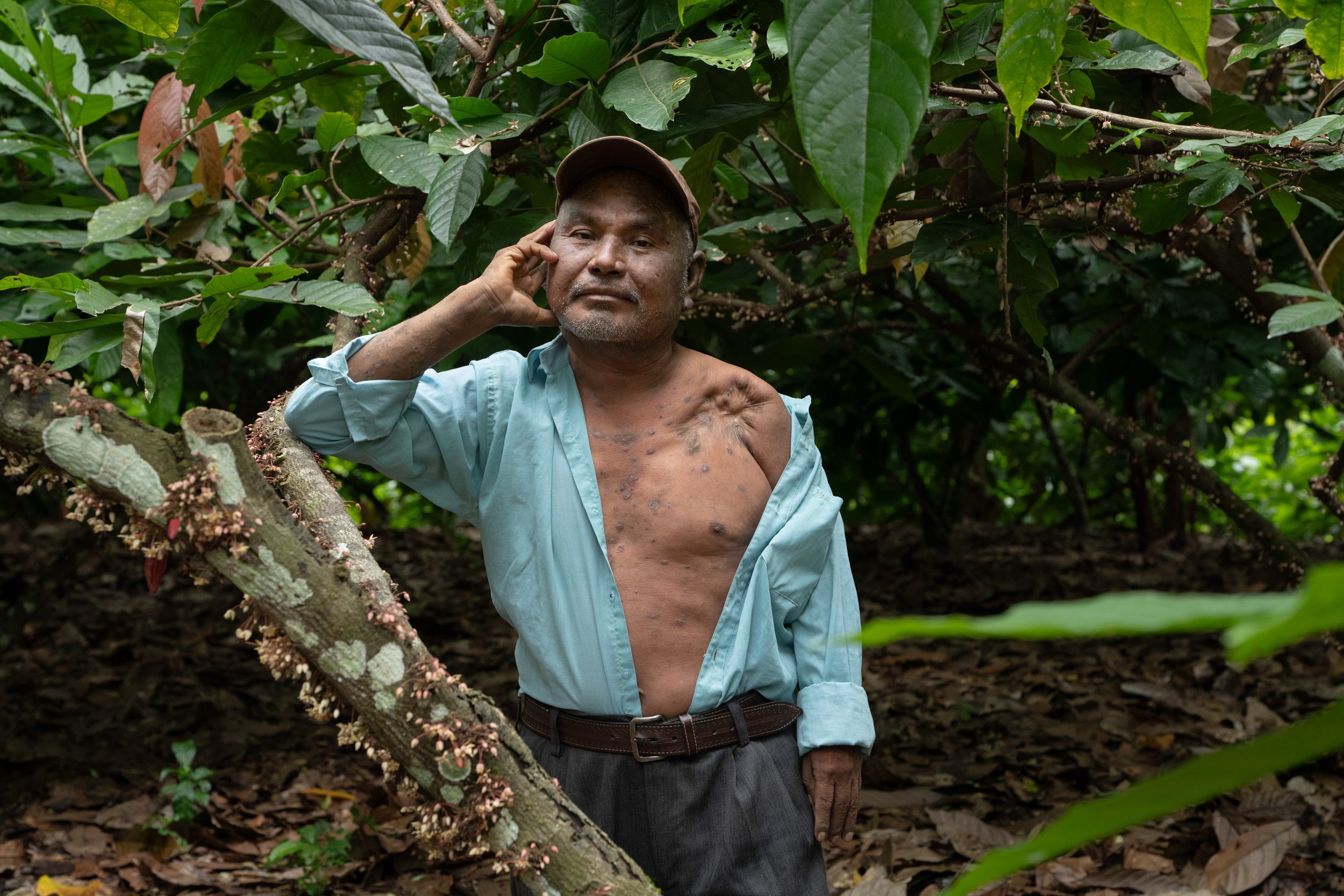
During the Guatemalan Civil War, Pinares, a Mayan village in the Alta Verapaz region, suffered many losses. Among the 100 families who lived there, over thirty people died and many were injured. When he was eleven years old, Rimiro Tec was shot in the shoulder which broke his growth plate, leaving his arm forever at its underdeveloped size. He is now the president of APIDIP, a cacao cooperative that is helping the community rebuild through cacao.
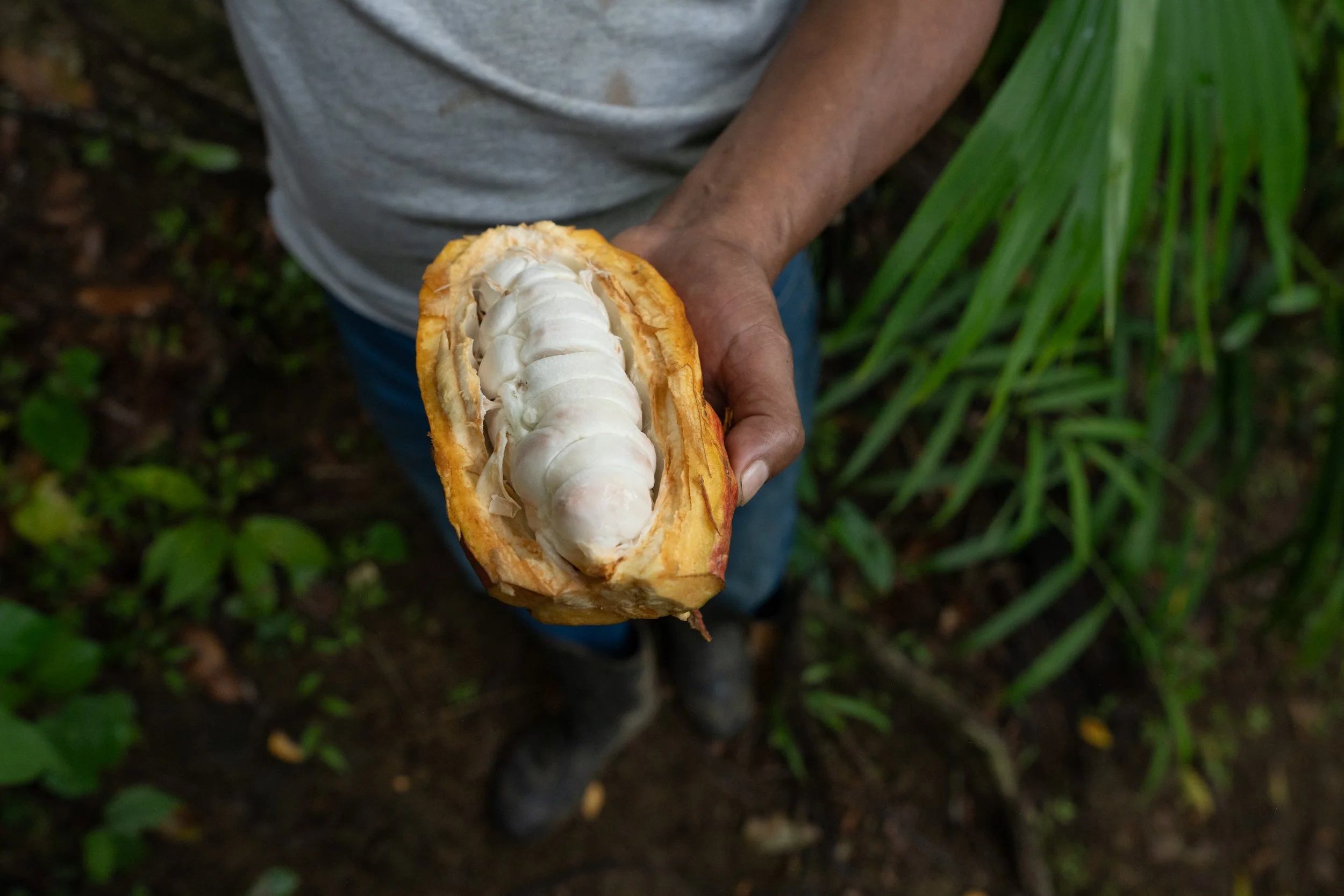
Lauro Cahal shows the white fruity pulp that surrounds cacao seeds. This pulp infuses nuanced flavors into the seeds during fermentation. While the cacao variety is critical for flavor, the fermentation process is just as important for achieving optimal flavor profiles in the finished product.
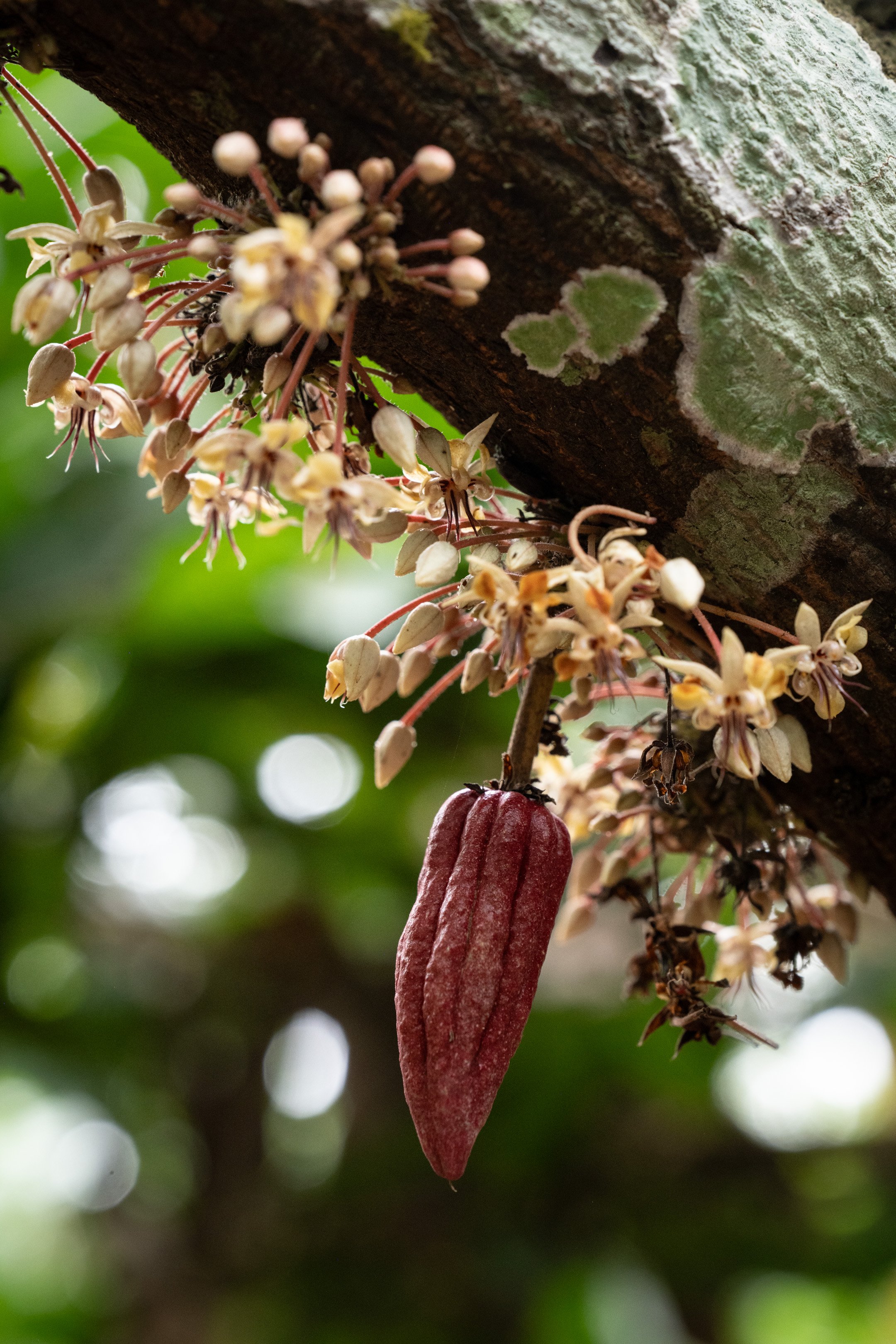
Cacao pods come in many different colors and sizes from light green to dark red and have seeds that range from white to dark purple. Unlike many fruits that occupy the tips of branches, cacao pods grow straight out of the trunks and primary branches from a proliferation of small intricate flowers.
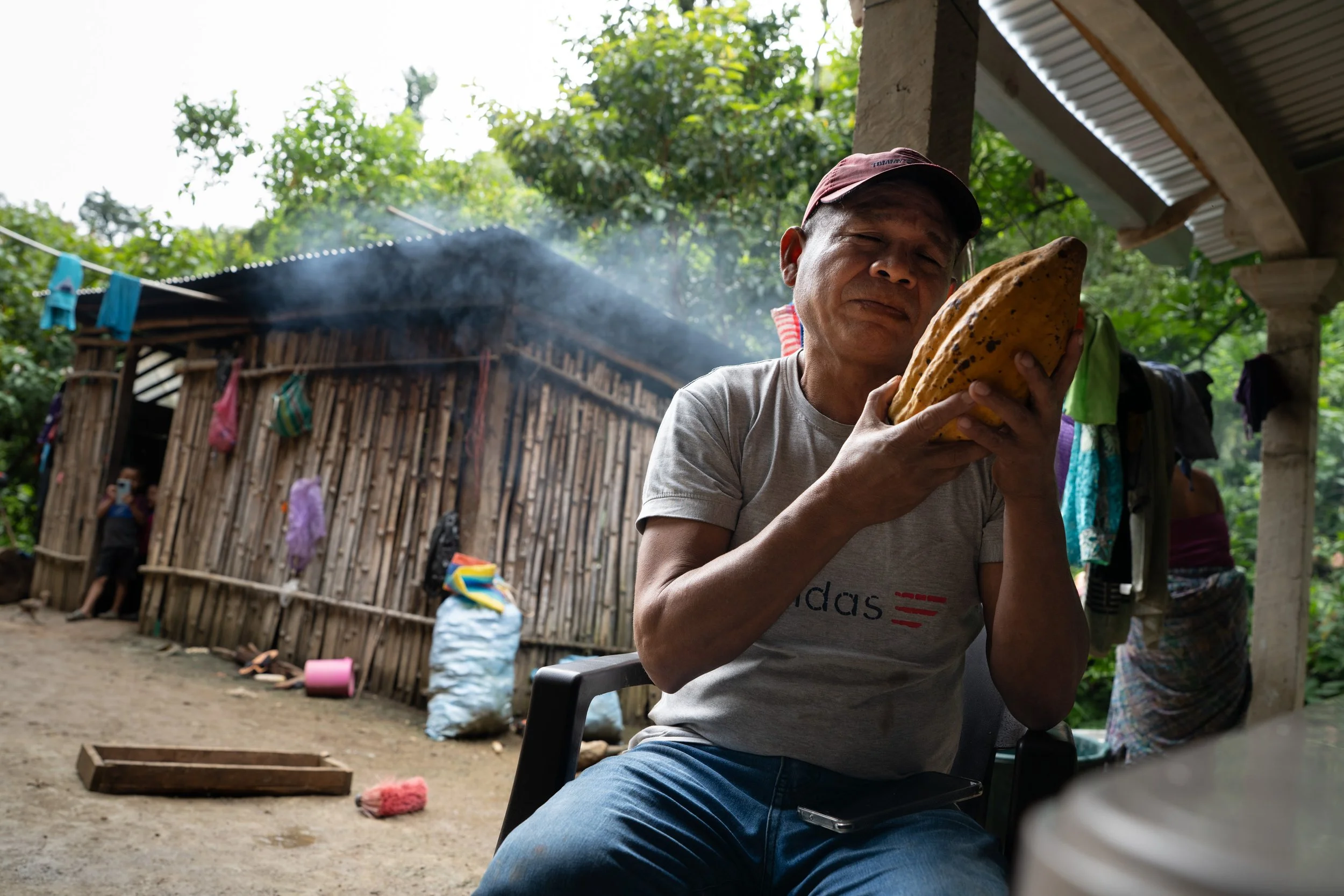
Lauro Cahal with a beloved Crillollo cacao pod at his farm near Lanquín, Guatemala. He expresses deep gratitude for cacao, which he says makes everything in his life possible.
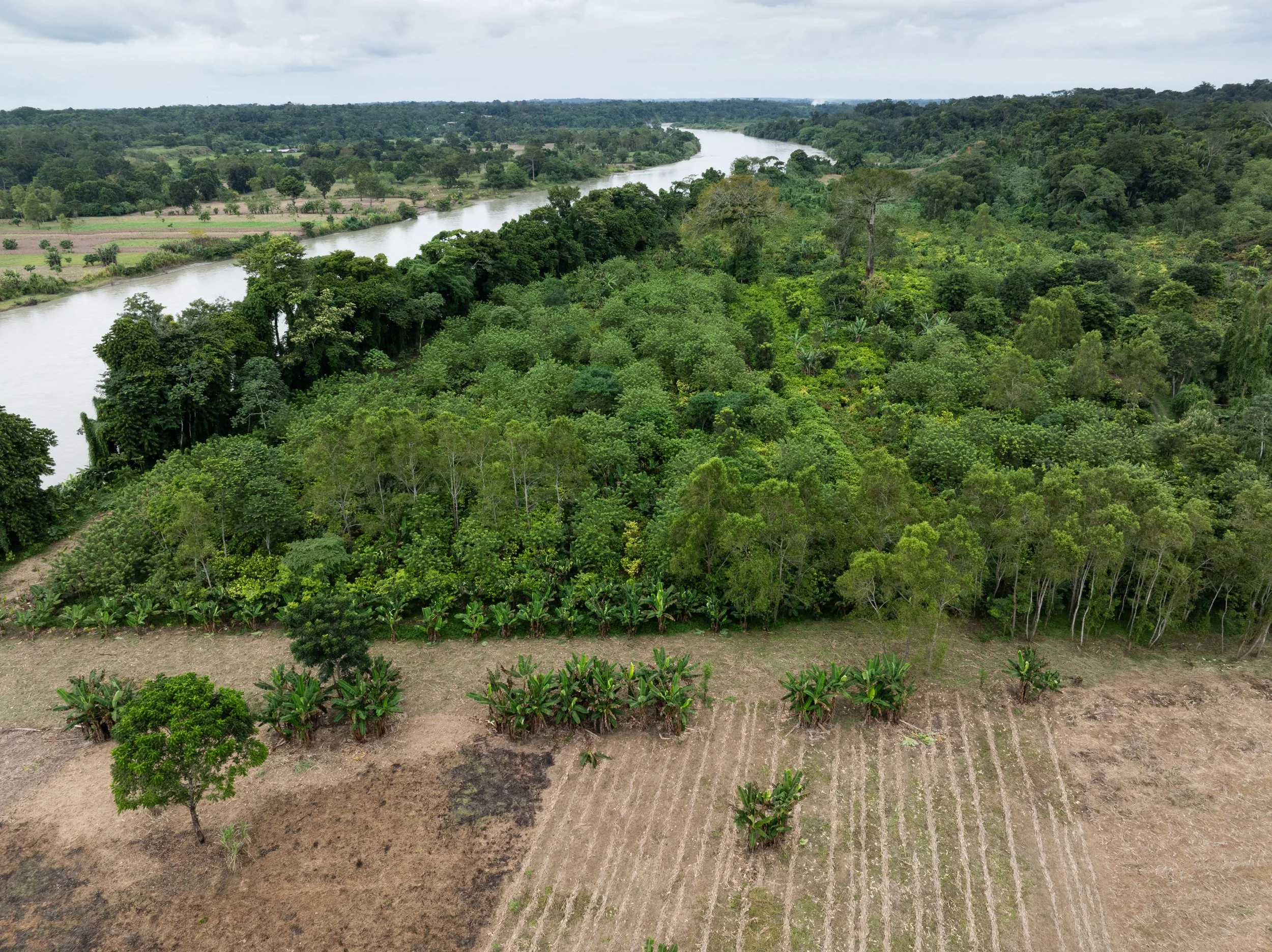
Finca Ana Maria in the Alta Verapaz region of Guatemala once grew corn, like the adjacent farm in the foreground. Thirteen years ago, Erick Ac converted it to a diversified cacao farm which has greatly improved the soil, biodiversity, and carbon sequestration capacity of the land.
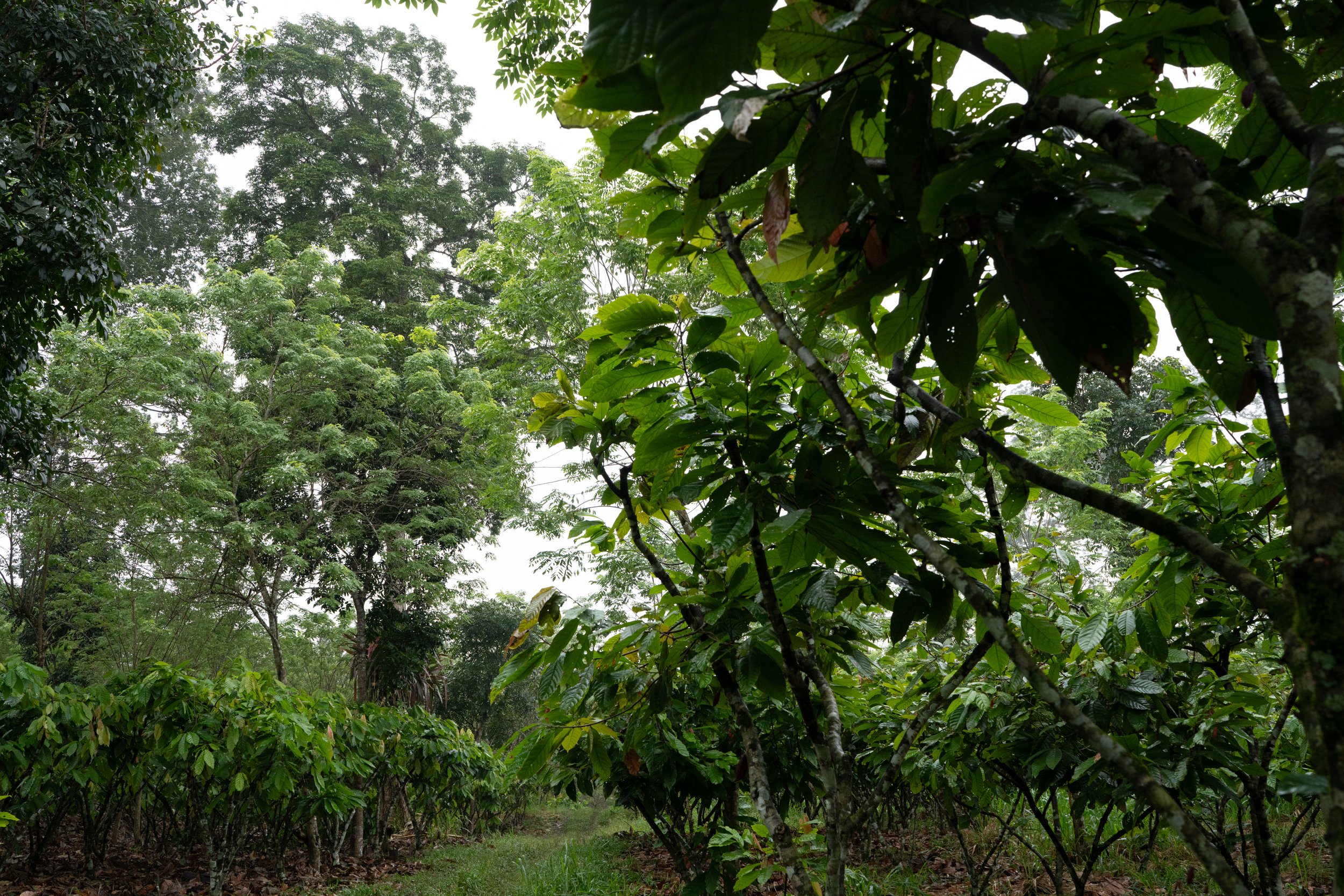
Heirloom cacao thrives under a diversified canopy of taller trees, making it an ideal crop for forest preservation and restoration efforts. The European Union Deforestation Regulation (EUDR) is mandating that all imported cocoa must be deforestation-free, legal, and traceable with compliance deadlines of January 2025 for large operators and June 30 2026 for small operators.
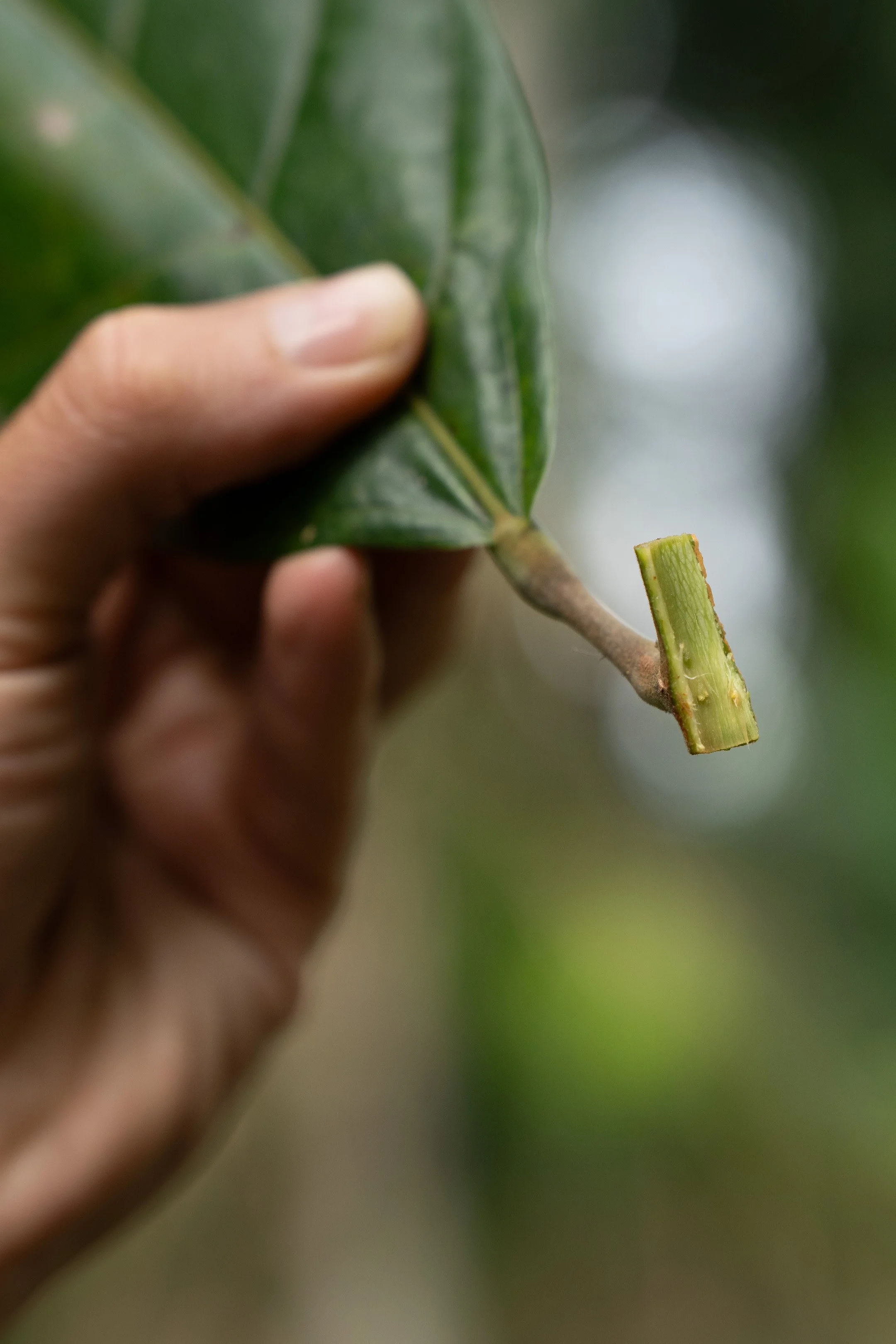
Grafting is a common practice used to preserve and proliferate desired strains of cacao. This section of an heirloom variety is ready to graft onto a new cacao sapling.
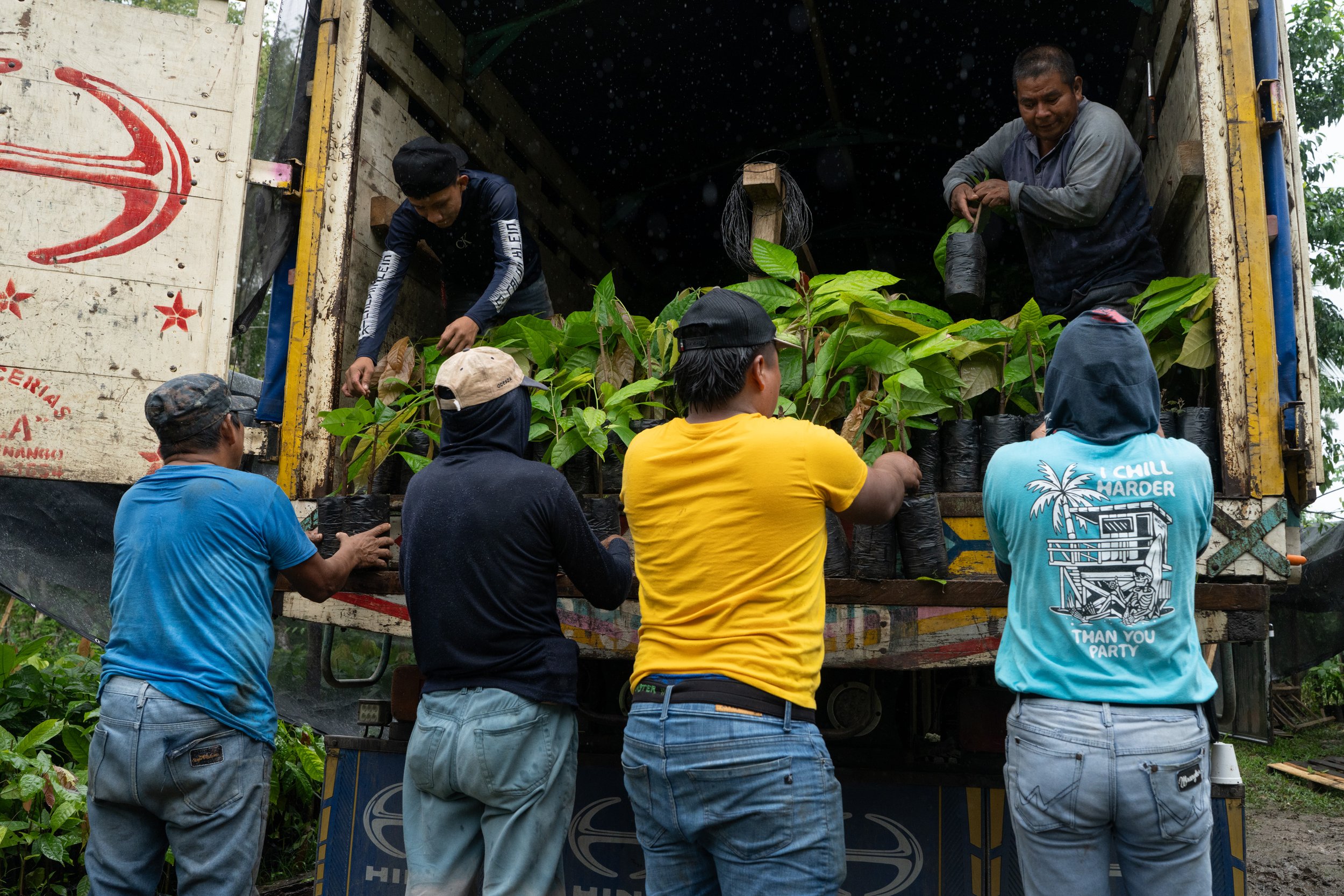
One of Finca Ana Maria's main income sources is through sales of their unique, heirloom varieites. Here, workers are loading one of four trucks that will take 20,000 grafted seedlings to another cacao farm in Guatemala.
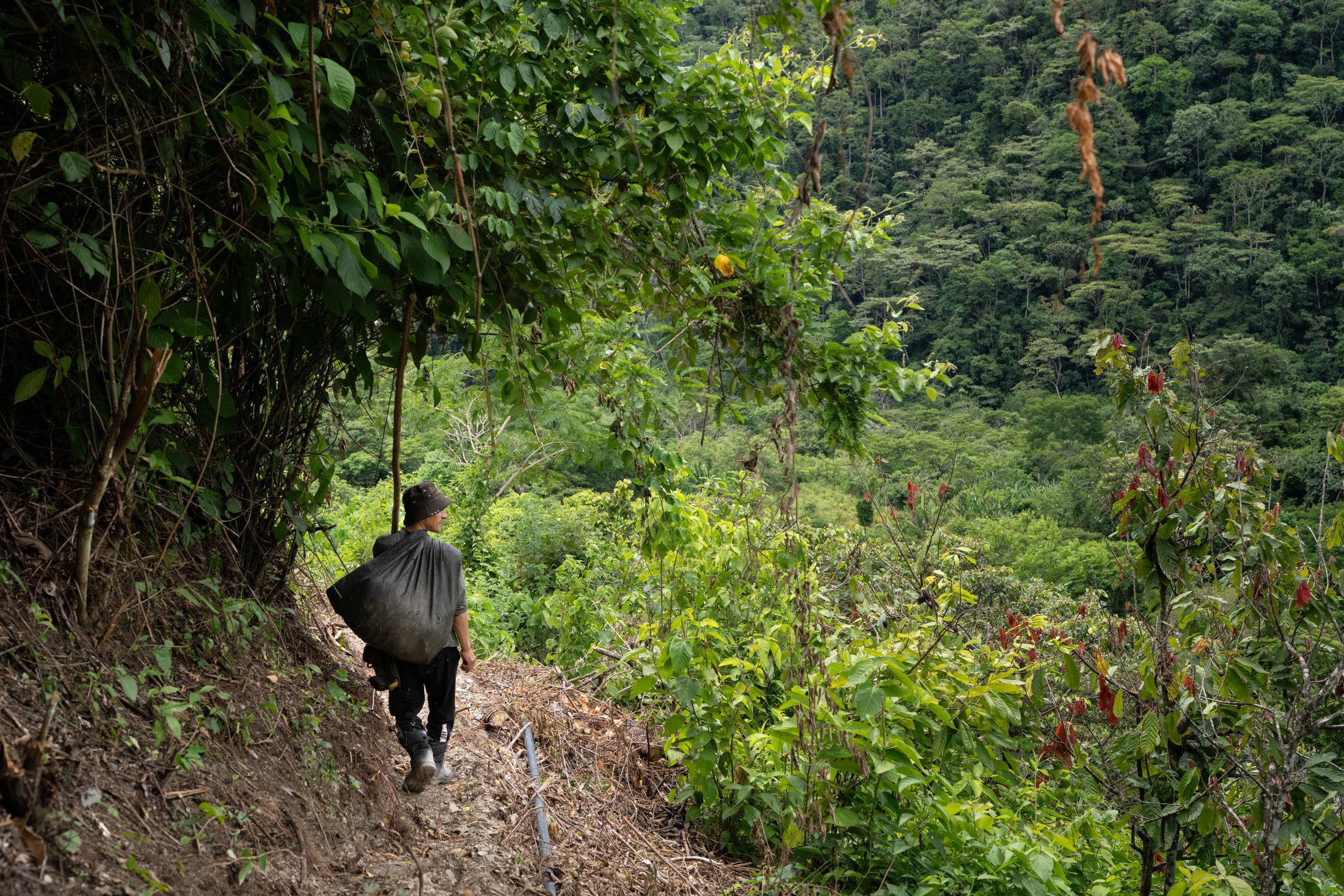
Celestino Valenzuela Coronado carries his pruning stick to tend to his cacao trees. Organic cacao farming requires year-round, hands-on maintenance to reduce pests, improve soil, and maximize yields.
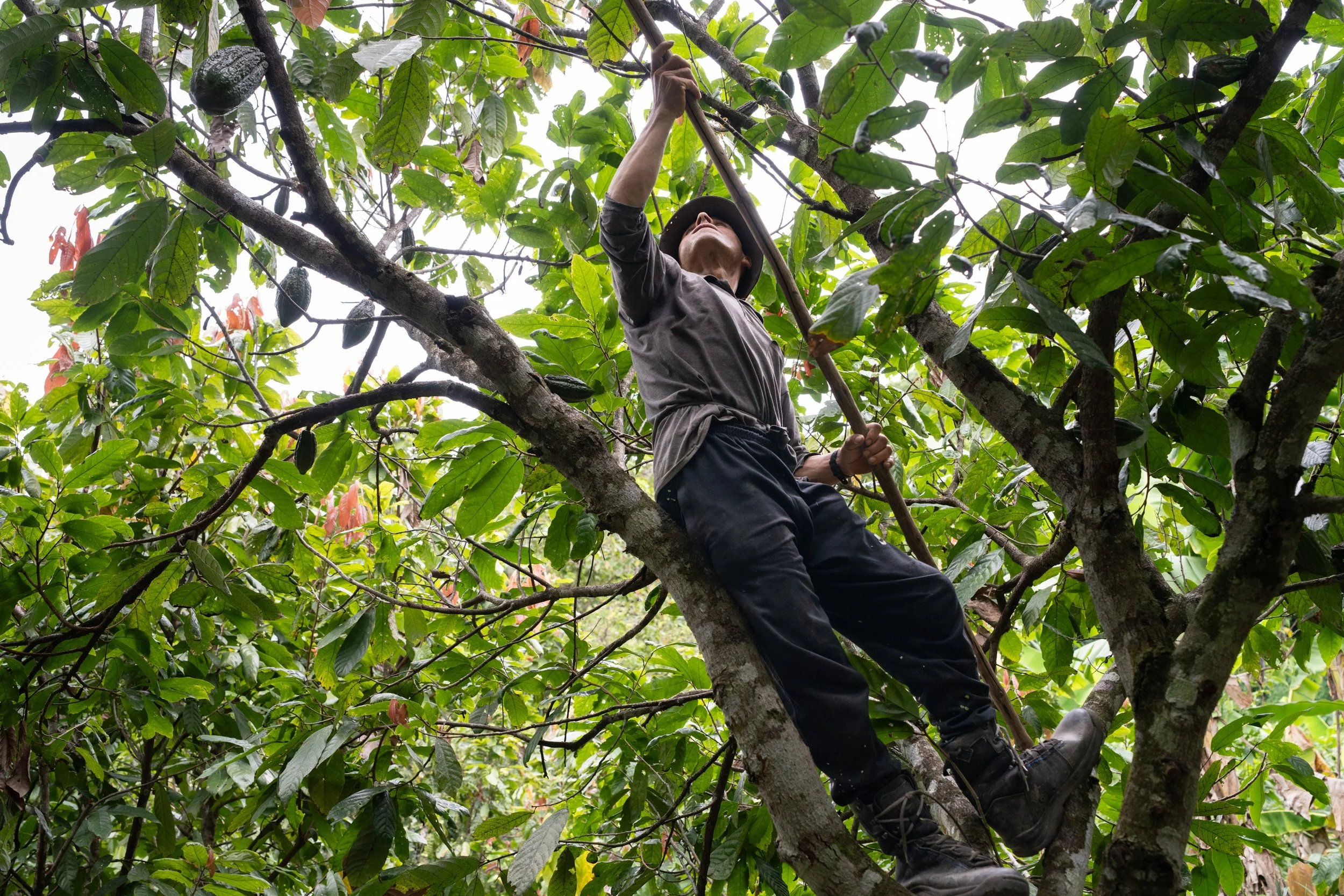
Celestino Valenzuela Coronado prunes dead branches from a cacao tree in the Ayacucho region of Peru. Older trees, like this heirloom Chuncho variety, can reach 40-50 feet tall, making maintenance and harvesting physically demanding.
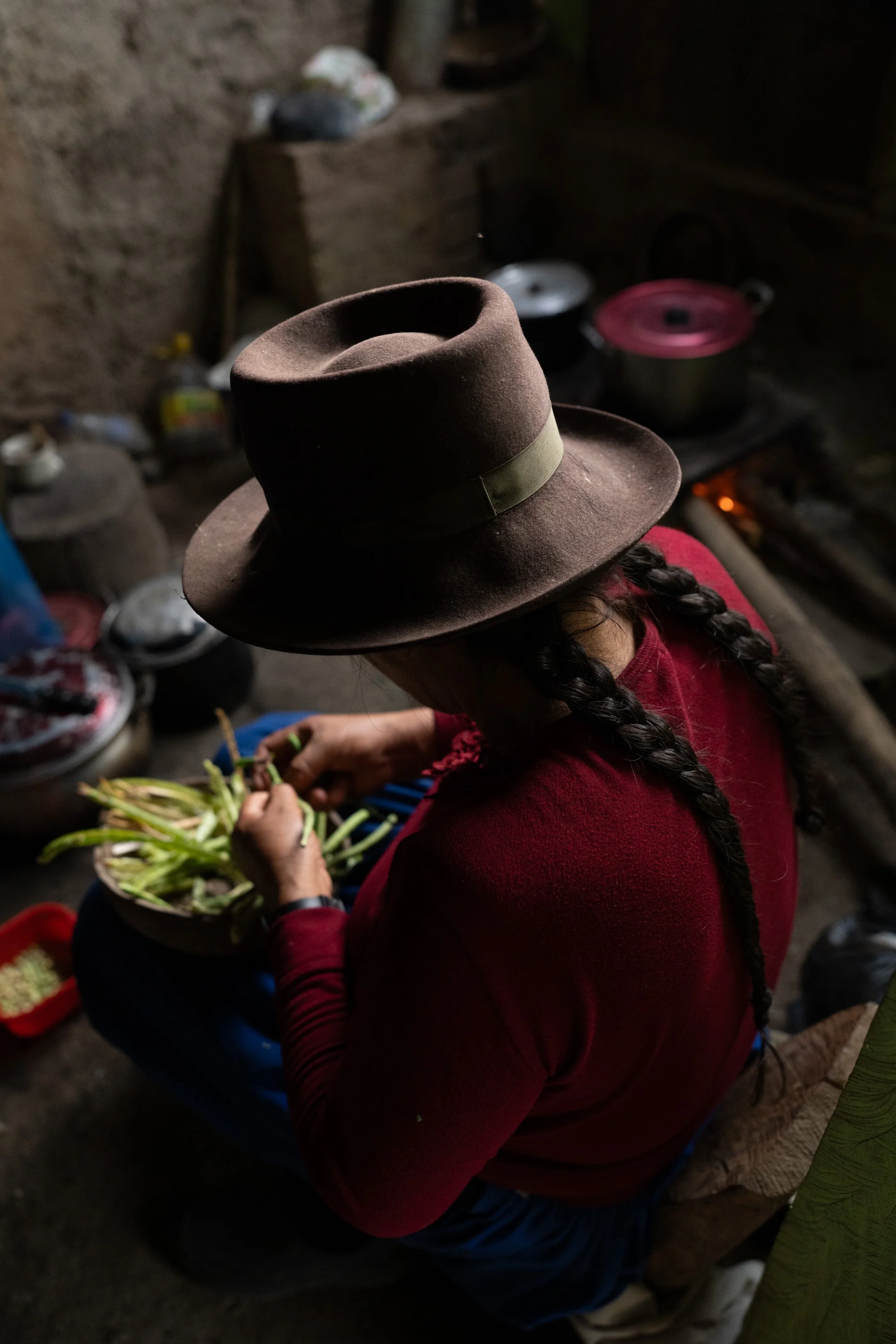
Mirtha Huaman Garay shells beans that she grew beneath young cacao trees in the diversified agroforestry system their family employs in the Ayacucho region of Peru.
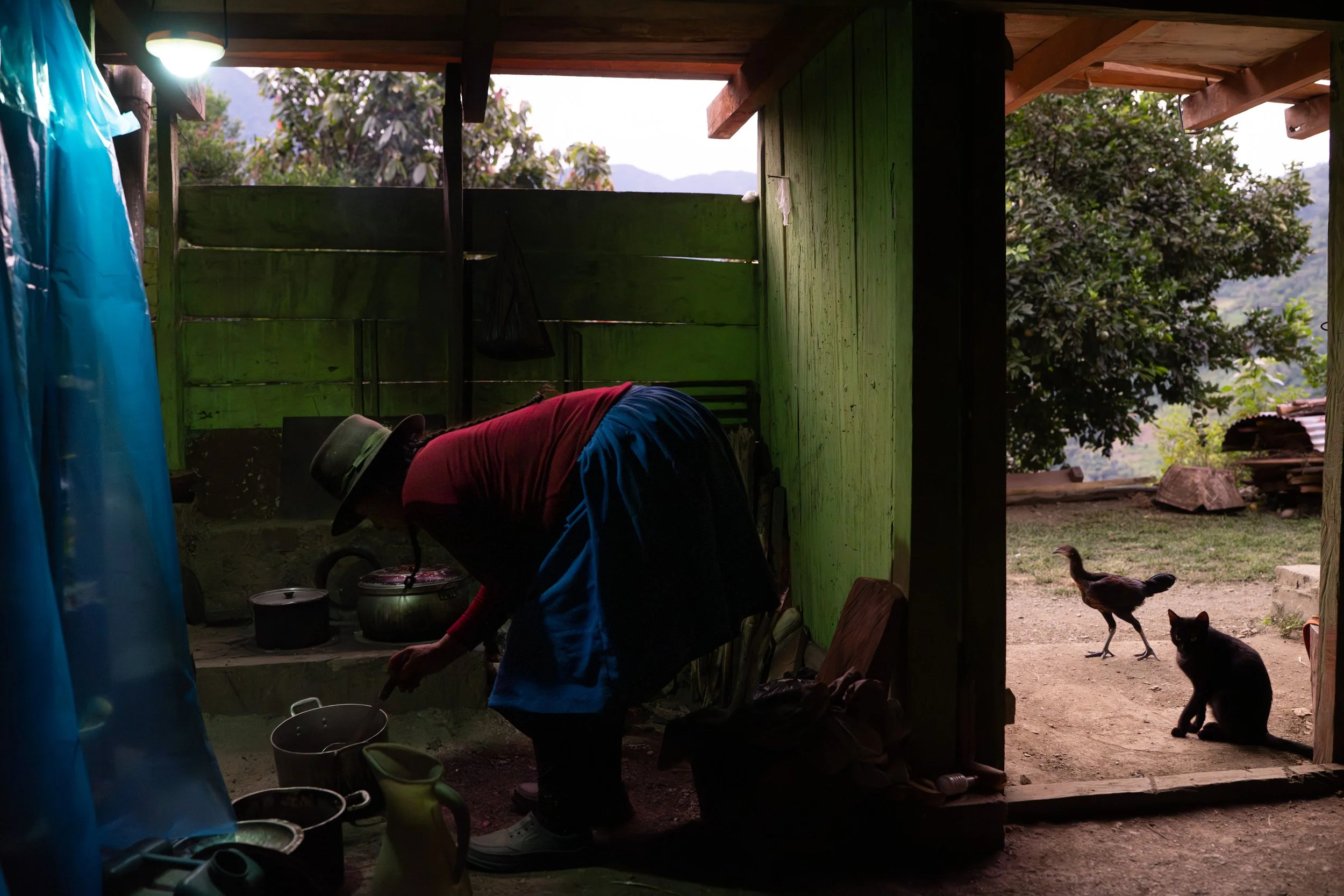
Mirtha Huaman Garay stirs soup in the light of a portable, rechargeable light. The region doesn't yet have electricity, but her family has one solar panel which is used to charge a few lights and their mobile phones.
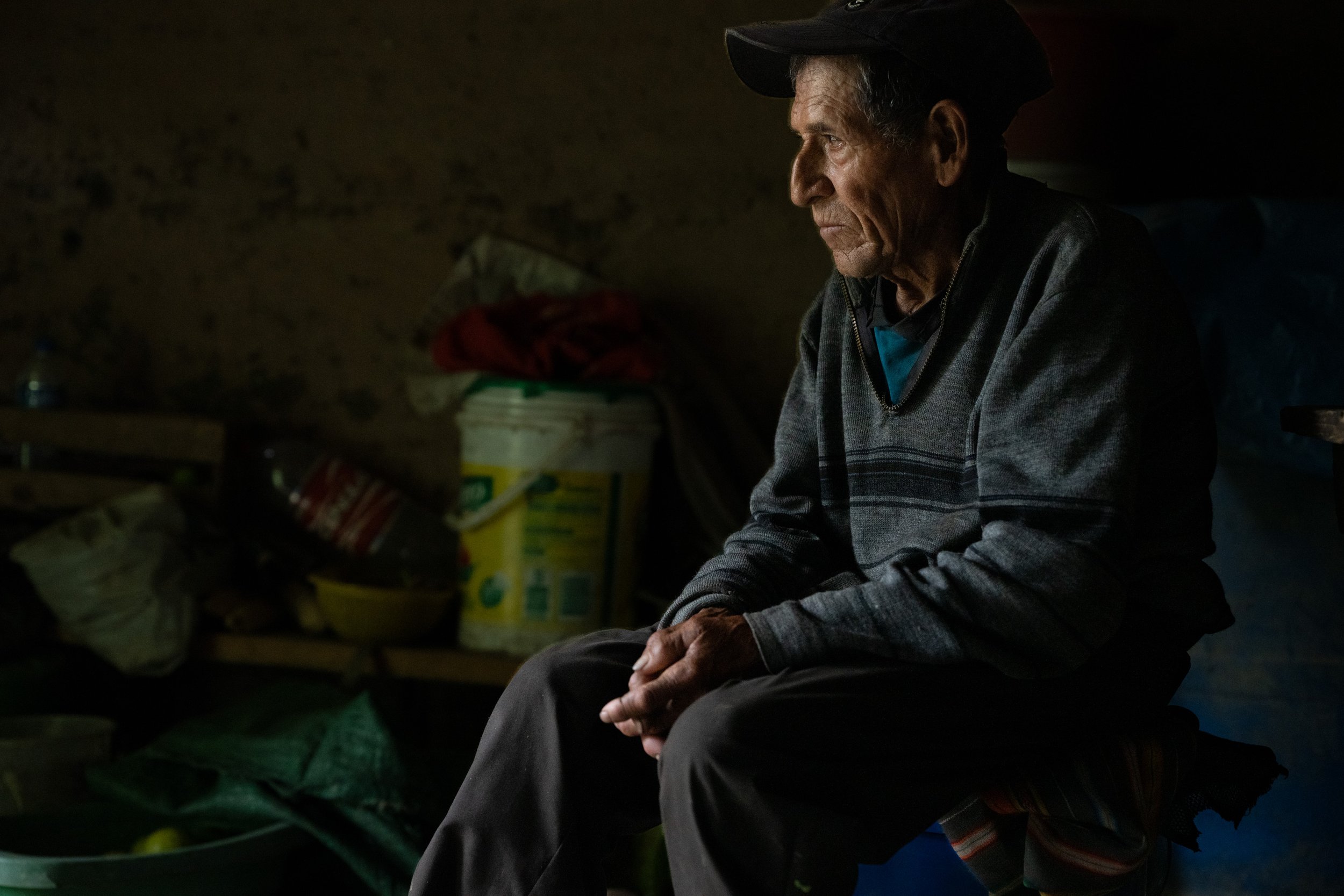
When Julián Valenzuela Palomino bought his cacao farm in the Chungui District of Peru, old Chuncho cacao trees graced the slopes, which he estimates are now over 100 years old.
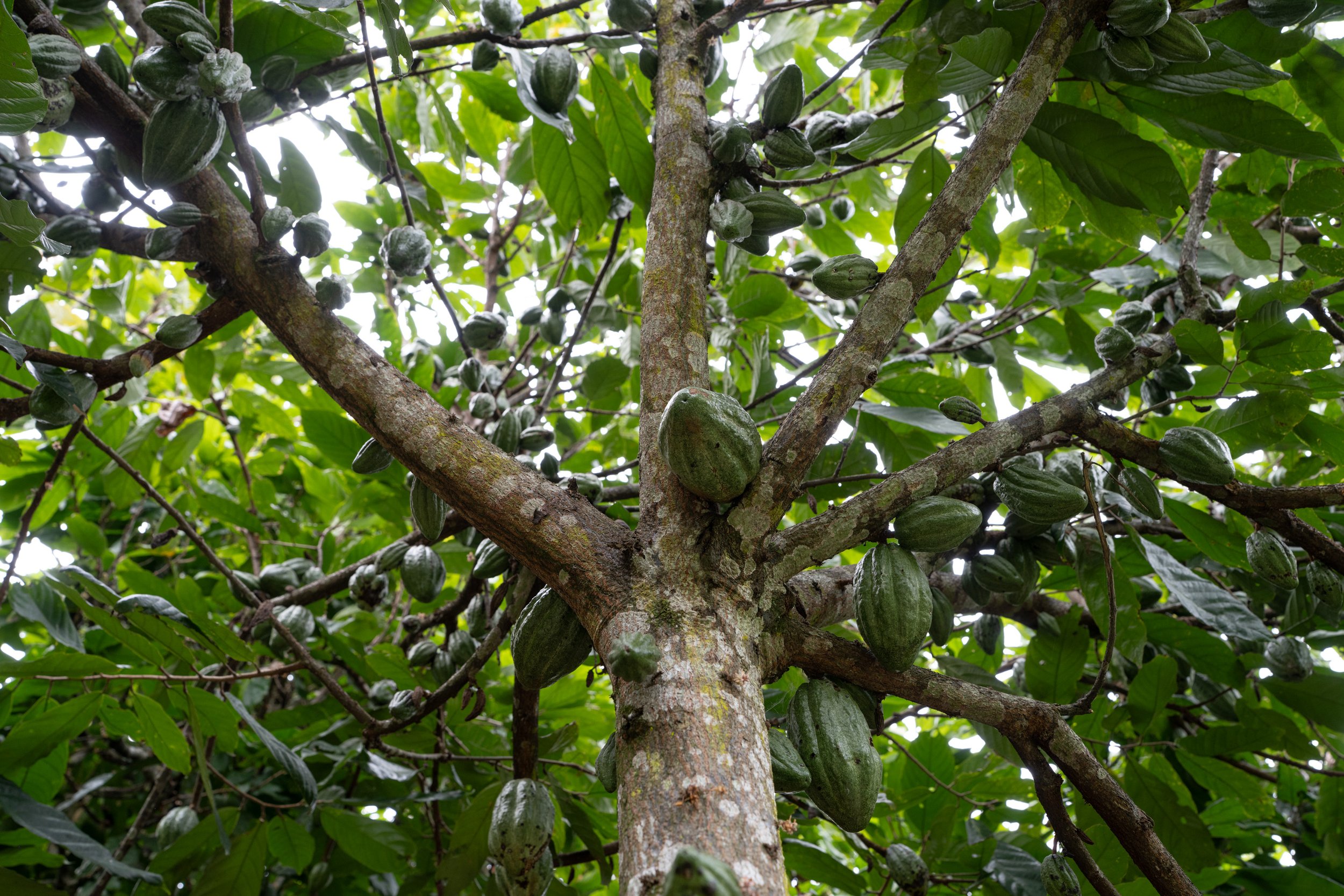
Chuncho cacao grows at higher elevations than any other variety. To accommodate cooler temperatures, the seeds have a higher cocoa butter content to protect the germ. This gives the resulting chocolate a smooth, well-rounded flavor.
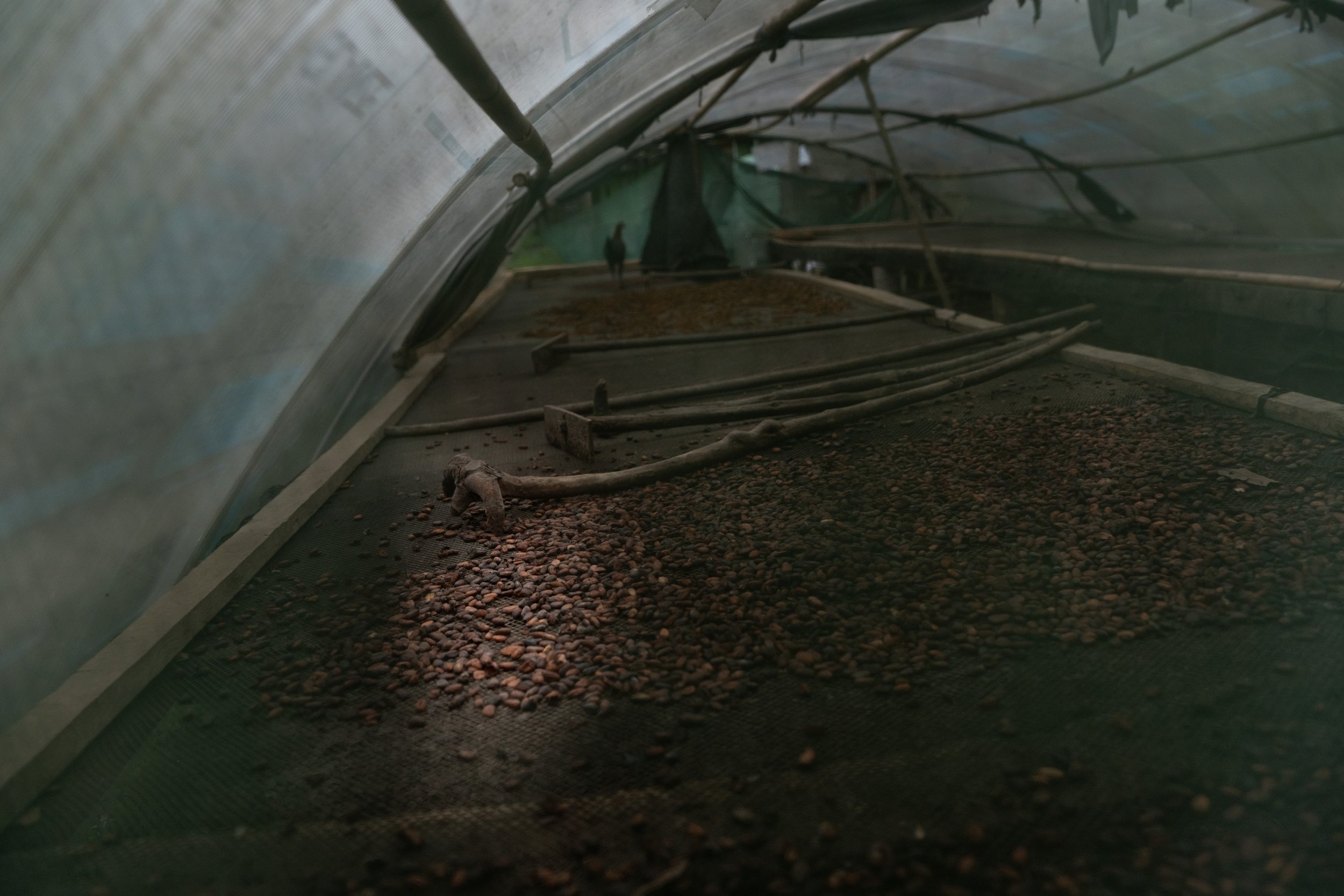
Most cacao is harvested within the primary season, but smaller quantities ripen throughout the year. Celestino and Mirtha harvest, ferment, and dry smaller batches for their own consumption while selling the best beans through Cooperativa Cacao VRAE.
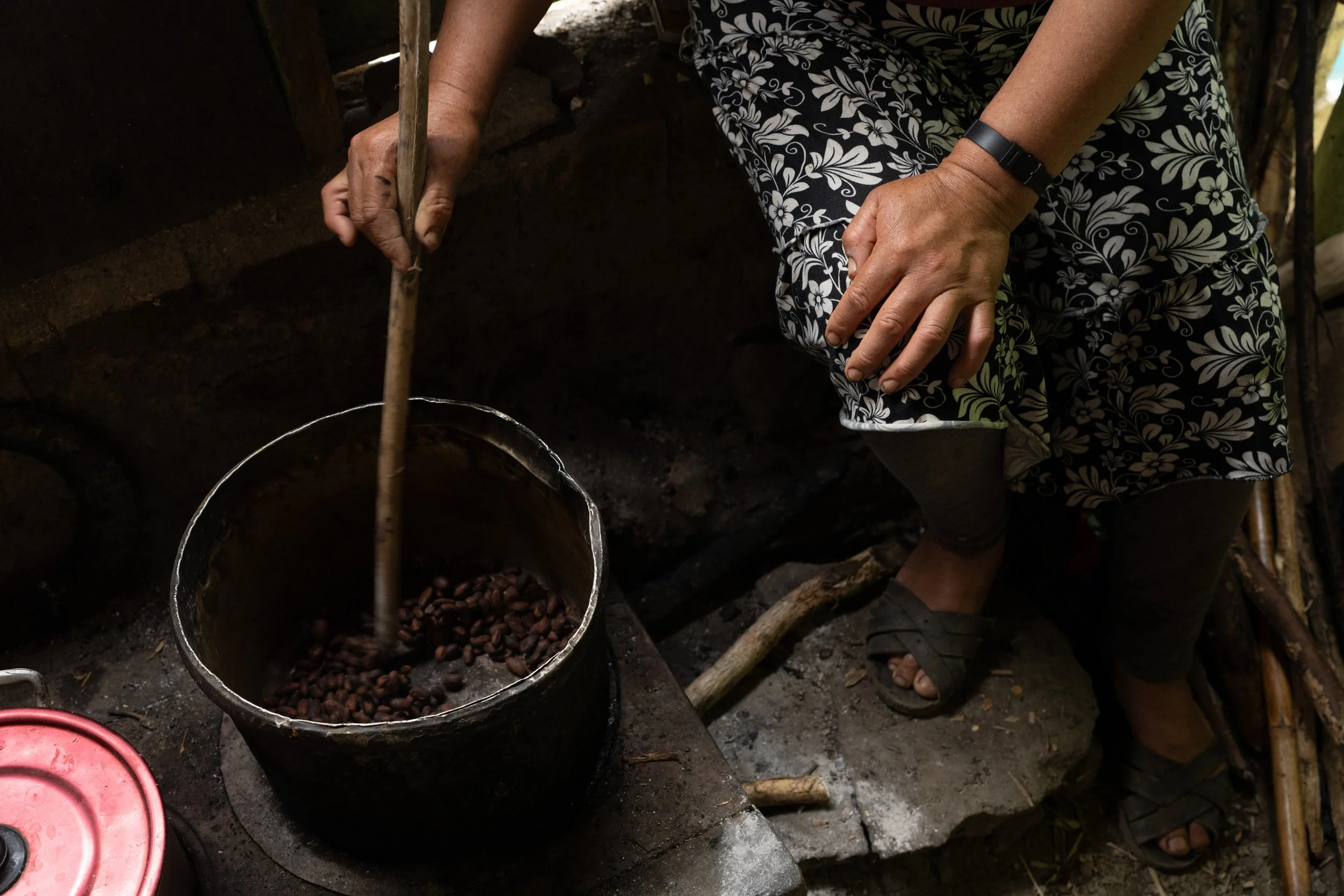
Mirtha Huaman Garay roasts cacao beans which she will peel and grind into a paste to make sipping chocolate. Few rural cacao growers have tasted chocolate in the bar form that is popular in industrialized countries.
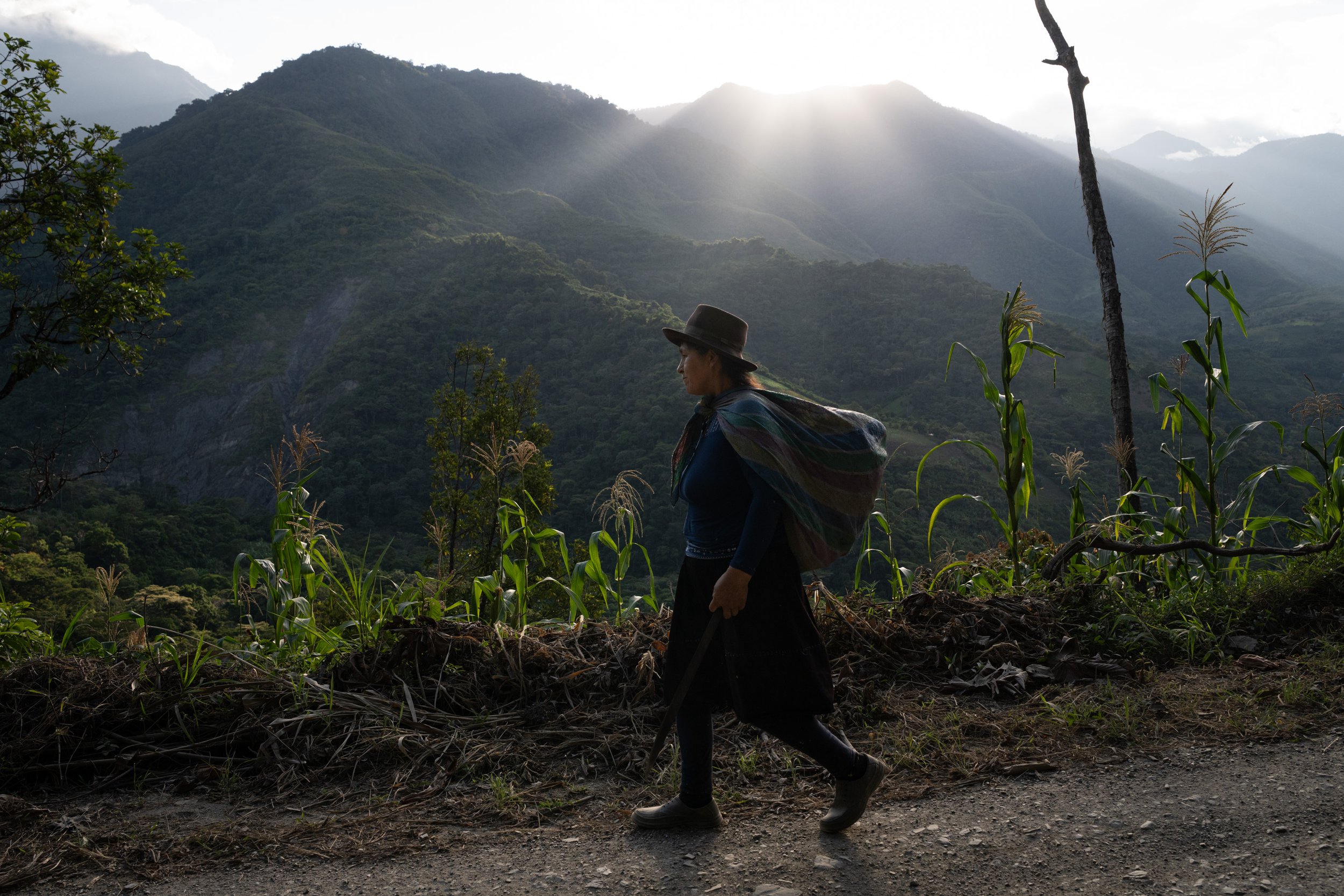
Mirtha Huaman Garay walks home from one of their cacao plots against the backdrop of the Peruvian Andes Mountains.
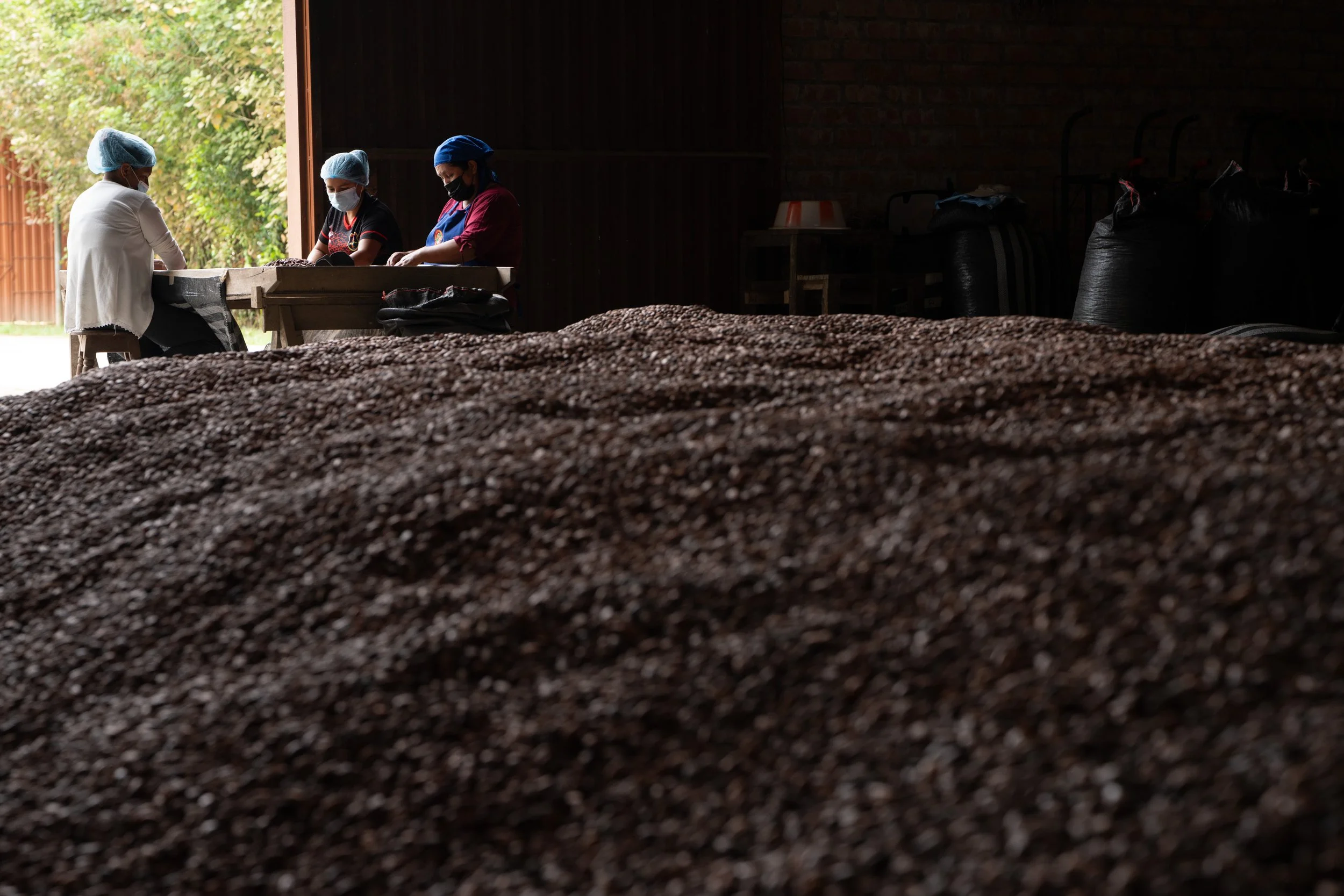
Women sort cacao beans beside a huge pile of beans that are ready for export at Cooperativa Cacao VRAE in Kimbiri, Peru.
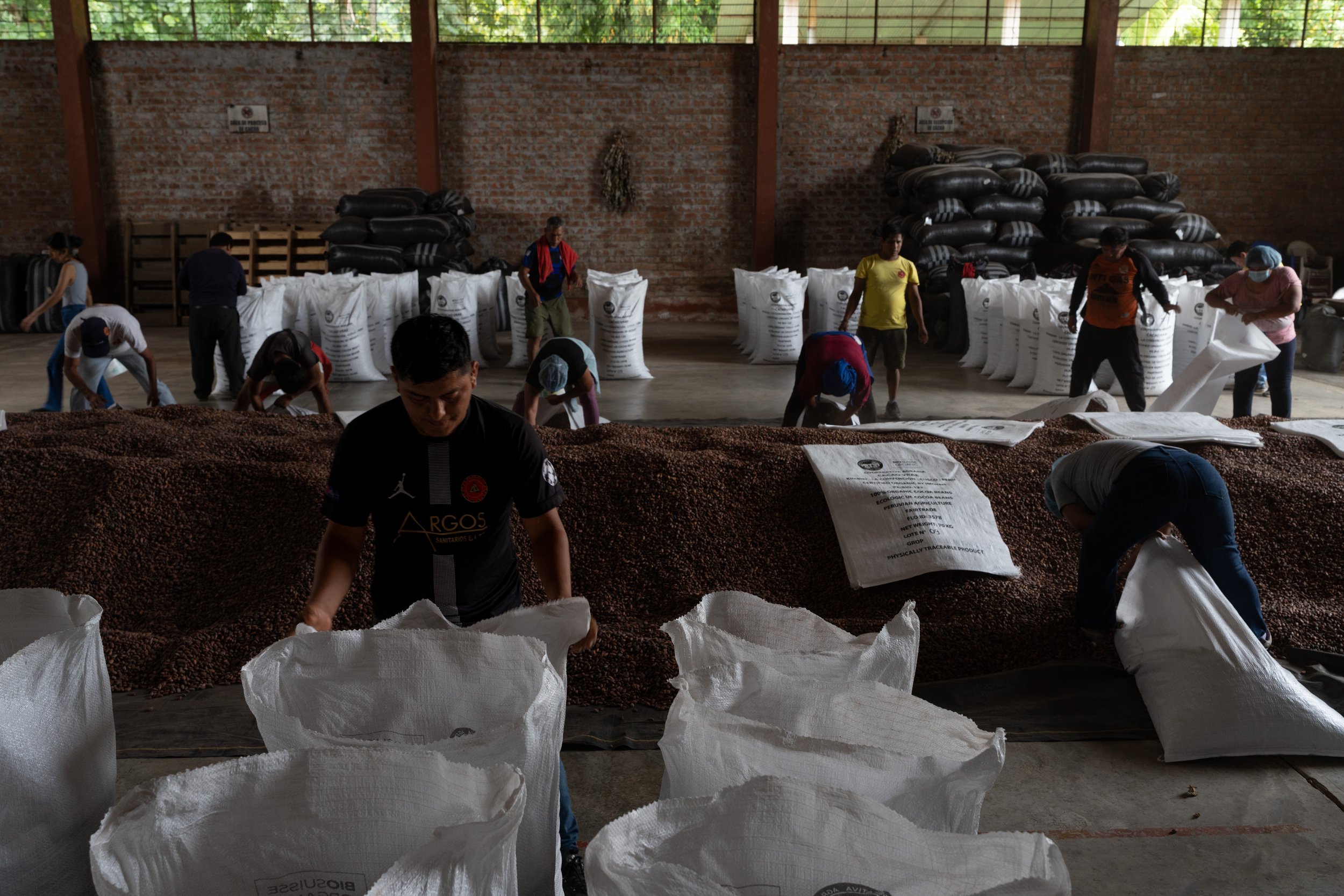
Workers of Cooperativa Cacao VRAE fill bags with organic, fair trade cacao that has been grown on small independent farms within the Cusco/Ayacucho valley of Peru. The Cooperative supports 274 associates with technical and logistical support, sales, certifications (Fair Trade, Organic, etc.), and more.
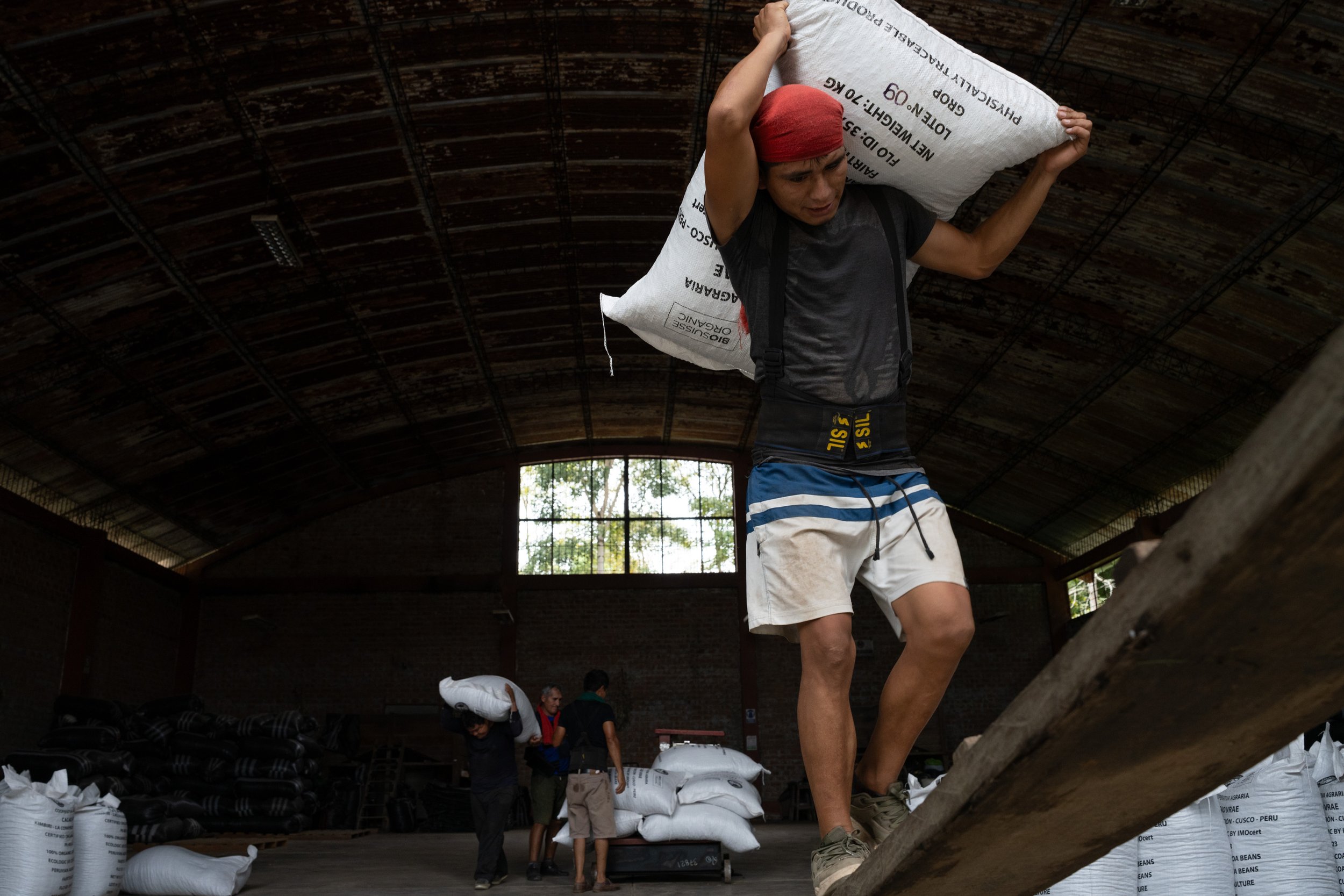
Alfredo Caylano carries a 70kg bag of organic, fair trade cacao into a truck that will travel two days to the port in Lima where it will be loaded onto a container ship and sent to Europe.